Showing posts with label Tourism in Indonesia. Show all posts

Wednesday, December 15, 2010

Tourism in Indonesia


Tourism in Indonesia

Tourism in Indonesia is an important component of the Indonesian economy as well as a significant source of its foreign exchange revenues. In 2009, the number of international tourists arriving in Indonesia climbed 3.6% to 6.45 million arrivals from 6.43 million in 2008. The subsequent economical impact of this tourist influx in 2009 saw $6.3 billion US dollars spent by international tourists in Indonesia, at an average spend of US$129.57 per day and US$995.93 per visit. Whilst the number of arrivals increased in 2009 the total spent per visitor decreased leading to a revenues shortfall of US$1.07 billion when compared to the previous year.[1][2]


Jump to: navigation, search


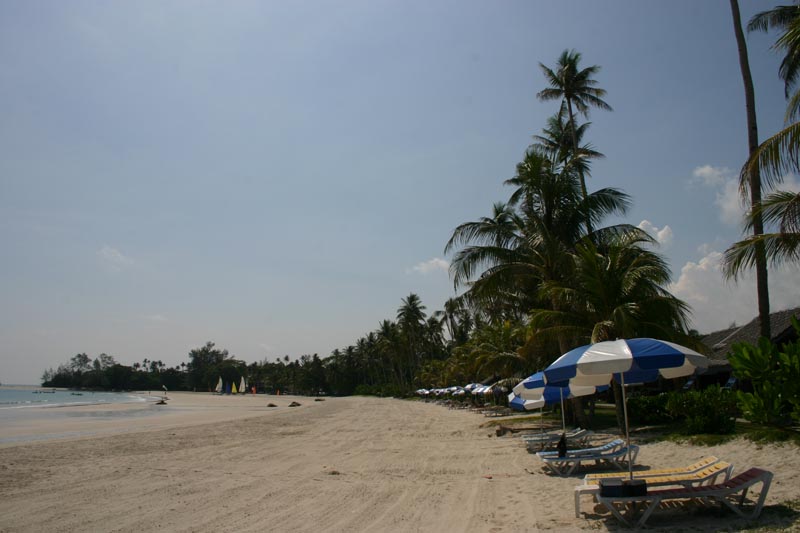
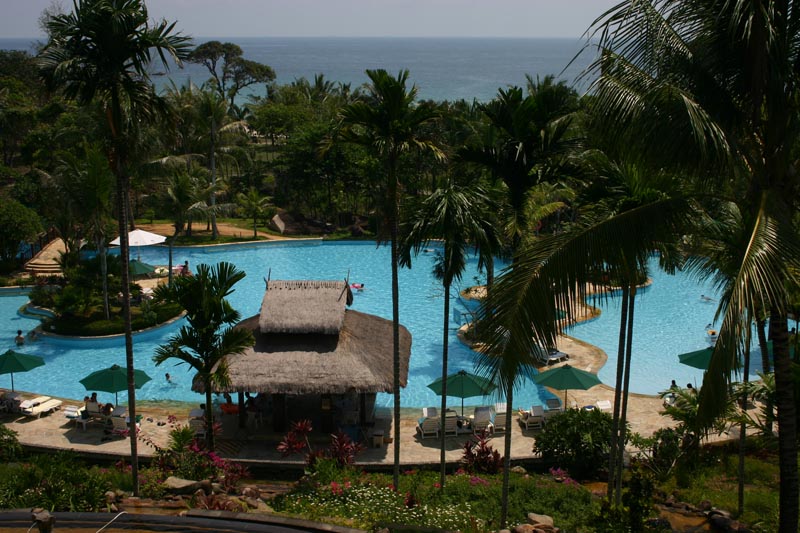
Both nature and culture are major components of Indonesian tourism. The natural heritage can boast a unique combination of a tropical climate, a vast archipelago of 17,508 islands, 6,000 of them being inhabited,[3] the third longest shoreline in the world (54,716 km) after Canada and the European Union[4]. It is the worlds largest and most populous country situated only on islands.[5] The beaches in Bali, diving sites in Bunaken, Mount Rinjani in Lombok and various national parks in Sumatra are just a few examples of popular scenic destinations. These natural attractions are complemented by a rich cultural heritage that reflects Indonesia's dynamic history and ethnic diversity. One fact that exemplifies this richness is that 719 living languages are used across the archipelago.[6] The ancient Prambanan and Borobudur temples, Toraja, Yogyakarta, Minangkabau, and of course Bali, with its many Hindu festivities, are some of the popular destinations for cultural tourism.
Tourism in Indonesia is currently overseen by the Ministry of Culture and Tourism.[7] International tourism campaigns have been focusing largely on its tropical destinations with white sand beaches, blue sky, and cultural attractions. Beach resorts and hotels have been developed in some popular tourist destinations, especially Bali island as the primary destination. At the same time, the integration of cultural affairs and tourism under the scope of the same ministry shows that cultural tourism is considered an integral part of Indonesia's tourism industry, and conversely, that tourism is used to promote and preserve the cultural heritage.

 

Thursday, December 9, 2010

Tourism in Indonesia

Tourism in Indonesia
 
IMG_0388.JPG (100804 bytes)
Tourism in Indonesia is being developed through two main programs, covering tourism and tourism products. There are five supporting programs, namely' control of environmental pollution, education, training and tourism guidance; tourism research and development; tourism infrastructure development; and the supervision and development of arts and culture.
The target for tourism set in Repelita VI is 6.5 million foreign tourists with US$9 billion in foreign exchange. Meanwhile 84.2 million domestic tourists are expected to spend nine (9) trillion rupiahs. Through various activities, tourism is expected to generate 900.000 new job opportunities.

DOMESTIC TOURISM PROMOTION

IMG_0432.JPG (73968 bytes)

Tourist objects and tourist attractions are being introduced to the Indonesian people to promote domestic tourism. Group tourist awareness (Pokdarwis) has been established as moving spirit for tourist development such as the improvement of tourist attractions to socialize the Seven Charms Program (Sapta Pesona) consisting of safety, cleanliness, orderliness, comfort, beauty, hospitality, and enchanting memories. Until 1997/98, there were 921 Pokdarwis throughout Indonesia, or an increase of 71.5% since 1993/94. To encourage domestic tourism, in 1997/98 the Government started to develop tours for senior citizens.
The Tourist Awareness Campaign every year adopted different themes in accordance with the national development rhythm and dynamics. In 1997, the theme was The Year of Cooperatives and Telecommunication and in 1998 the theme was: The Year of Art and Culture.
Several national tourist events have been held throughout Indonesia. In 1997/98 the events included Toba Lake Festival in North Sumatra; The Indonesian Archipelago Palace Festival in West Java; Borobudur Festival in Central Java; Bromo Festival in East Java; The Balibo Art Festival in East Timor; The Bidar Kapuas Festival in West Kalimantan; Sea Park Festival in Maluku; and the Lembah Baliem Arts and Culture Festival in Irian Jaya.
Despite the current economic crisis which has hit Indonesia since July 1997, the number of domestic tourists increased steadily. In fiscal year 1997/98 the number of domestic tourists was 120 million persons who spent 14 trillion rupiahs.

DEVELOPMENT OF TOURISM PRODUCTS

IMG_0489.JPG (136655 bytes)

In fiscal year 1997/98, the Main National Tourism Development Plan (RIPP) was completed, as was the main Regional Main Tourism Development Plan for the provinces of Jambi, South Sumatra, South Sulawesi, Palembang, in South Sumatra; Kaliurang, Merapi and Merbabu in Central Java; Pasir Putih in East Java; Bukari in South East Sulawesi; the western part of West Java; Ratu boko in Sleman and Solo Kasunanan Palace in Central Java.
In facing the globalization era and to improve the regional and sub-regional economic endurance, a closer cooperation program in the tourism sector has also been implemented with several ASEAN countries, such as the Indonesia, Malaysia, Singapore - Growth triangle (IMS-GI), Indonesia, Malaysia, Thailand, Growth-triangle (IMT-GT) and Brunei, Indonesia, Malaysia, the Philippines East ASEAN Growth Area (BIMP-EAGA) on marketing and promotion of tourist package programs, promoting tourist marketing between the member countries, accommodating and mobilizing private investment in the field of tourism.
In fiscal year 1997/98, the new accommodation capacity was 31,953 rooms. The number of rooms available until 1997/98 was 185,136 rooms consisting of 81,997 rooms in star-rated hotels and 103,136 rooms in non-star hotels. At the same time, the application of information technology in the field of tourism has also been continued in 47 international hotel chain networks and 16 national hotels chain networks.
The number of travel bureaus in fiscal year 1997/98 also increased to 2,631 with 721 tour leaders reached 721 and 9,365 tour guides.

Related Posts Plugin for WordPress, Blogger...